


How to Get Permission to Metal Detect Private Property
Updated June 2026
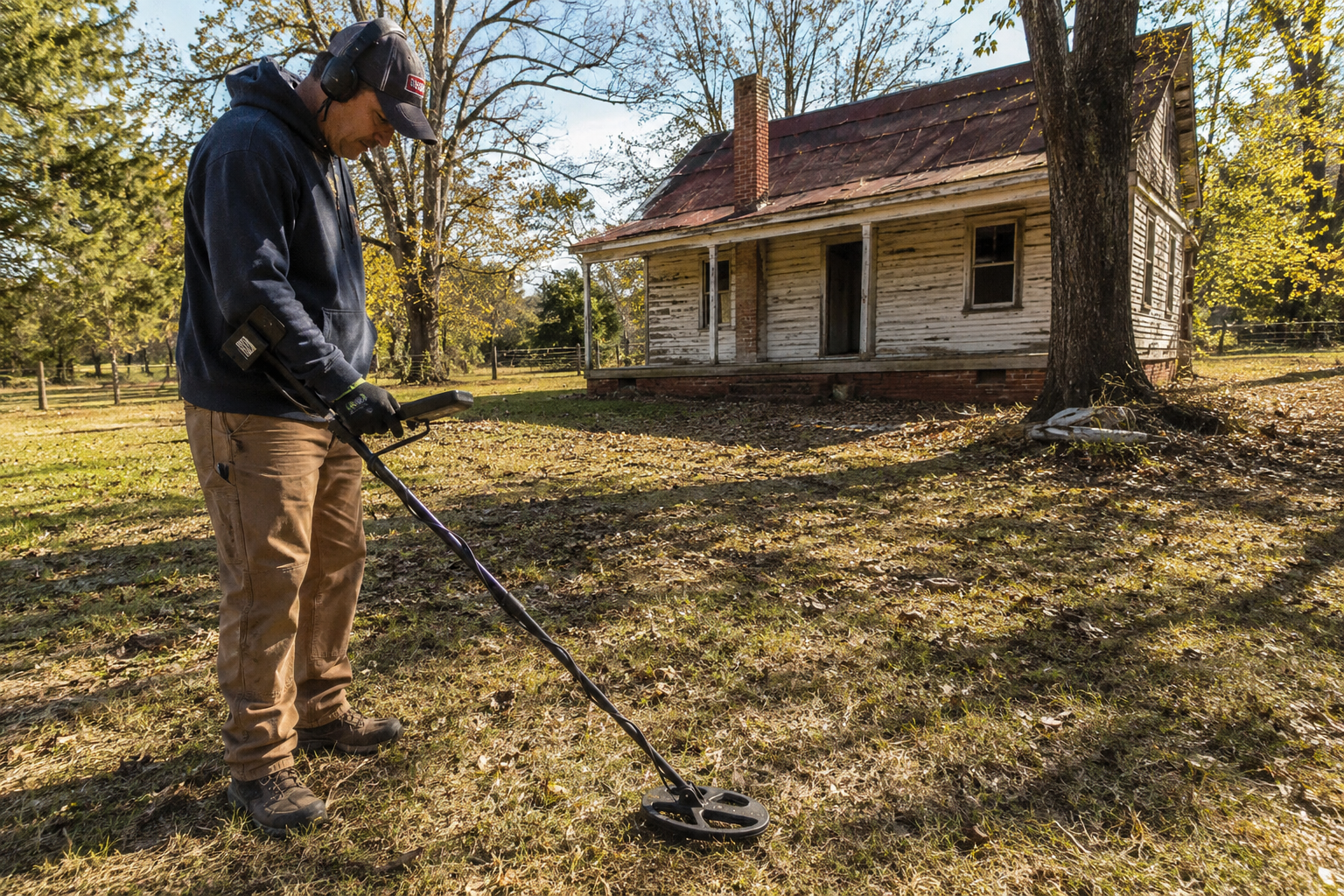
Learning how to get permission to metal detect private property is one of the most important skills a detectorist can have. The right permission can open up old home sites, farms, fields, wooded areas, and historic properties that may have never been searched before.
Private property can produce some of the best finds you will ever make, including old coins, relics, buttons, tokens, jewelry, and pieces of local history. But before you ever swing a detector on someone else’s land, there is one step you cannot skip: you need permission first.
Getting permission to metal detect does not have to be awkward or complicated. Most of the time, it comes down to being respectful, honest, and making the landowner feel comfortable with who you are and what you plan to do.
If you are still looking for the right machine for this type of hunting, you can always browse our full selection of metal detectors at Big Boys Hobbies, or reach out and we will help point you in the right direction.
Why Permission Matters Before Metal Detecting
Metal detecting without permission can damage the reputation of the hobby and cause problems for both you and other detectorists. Even if a property looks abandoned, unused, or open, it still belongs to someone.
Always ask first. A polite conversation can open the door to a great detecting spot, and it also shows the landowner that you are responsible and respectful.
Keep in mind that different areas may have different rules. Private land, public parks, schools, city property, state land, and historic sites can all have different requirements. When in doubt, ask first and check local rules before detecting.
1. Pick the Right Properties to Ask About
Not every property is worth asking for, so start by looking for places that may have history. Good places to research include:
- Old homes and farmhouses
- Old barns, outbuildings, and home sites
- Fields near older roads or former gathering places
- Wooded areas where old structures may have once stood
- Properties near old schools, churches, mills, or trading areas
- Old lots where homes or businesses used to stand
You can use online maps, old maps, county property records, or even just drive around and make notes of interesting properties. The more research you do ahead of time, the better your chances of finding a place that may produce older finds.
2. Find Out Who Owns the Property
Once you find a property that looks promising, try to figure out who owns it. Many counties have online assessor maps or property records that can help you locate the owner’s name and mailing address.
If the property has a home on it and it feels appropriate, a simple knock on the door may work best. If it is a farm, field, or vacant property, you may need to do a little more research before reaching out.
Never assume that “nobody uses it” means nobody owns it. Someone owns the land, and getting that person’s approval is the right way to do it.
3. Make a Good First Impression
First impressions matter. You do not have to dress fancy, but you should look clean, respectful, and approachable. A clean shirt, jeans, and a friendly attitude go a long way.
Be polite, smile, and keep your introduction short. You do not need to over-explain everything right away.
Here is a simple example of what you could say:
“Hi, my name is [Your Name]. I’m a local metal detecting hobbyist. I noticed your property looks like it has some history, and I wanted to ask if you might consider giving me permission to do a little metal detecting. I always fill my holes, remove any trash I dig, and I would be glad to show you anything interesting I find.”
4. Explain What You Will Do — and What You Will Not Do
A landowner may not know much about metal detecting. They may worry about holes, damage, gates being left open, livestock, crops, or strangers walking around the property. Your job is to make them feel comfortable.
Tell them clearly that you will:
- Fill every hole neatly
- Remove trash and junk targets you dig
- Respect yards, crops, fences, animals, and buildings
- Stay only in the areas they approve
- Show them anything interesting or valuable you find
- Leave immediately if they ever change their mind
This is also a good time to ask if any areas are off limits. Some landowners may be fine with you detecting a field but not the yard. Others may want you to stay away from livestock, gardens, driveways, or certain buildings.
5. Offer to Share Finds or Let the Owner Choose
Every detectorist handles finds differently, but when asking permission, it can help to be upfront. Some landowners may not care about what you find, while others may be curious or want to keep something connected to their property.
You might say something like:
“If I find anything that looks personal, valuable, or historically connected to the property, I’ll be glad to show it to you. If it is something important to your family or the history of the place, we can talk about it.”
This makes the landowner feel included and respected instead of feeling like someone is just coming onto their property to take things.
6. Ask for Clear Boundaries
Before you start detecting, make sure you understand exactly where you are allowed to go. Ask simple questions like:
- “Is it okay if I detect near the barn?”
- “Would you rather I stay out of the front yard?”
- “Are there any areas you do not want me walking through?”
- “Is it okay if I come back another day if I do not finish?”
- “Are there any livestock, crops, or gates I need to be careful around?”
Clear boundaries help avoid misunderstandings. They also show the landowner that you are trying to do things the right way.
7. Get Permission in Writing When It Makes Sense
For a quick yard hunt, a verbal yes may be enough for some people. But for larger permissions, old farms, fields, or repeat visits, getting written permission can be a smart idea.
It does not have to be complicated. A simple note like this can work:
“I, [Owner’s Name], give [Your Name] permission to metal detect on my property located at [Property Address]. Permission is limited to the areas approved by the property owner. [Date]”
You can also include basic terms such as filling holes, removing trash, respecting boundaries, and not bringing additional people without permission.
8. Be Ready for Rejection
Not everyone will say yes, and that is okay. Some people are private. Some have had bad experiences. Some simply do not want anyone on their land.
If someone says no, thank them politely and move on. Do not argue, pressure them, or try to talk them into it. A respectful “No problem, thank you for your time” leaves a much better impression than trying to push.
Sometimes the person who says no today may say yes later, especially if they hear good things about you from a neighbor.
9. Respect the Property Like It Is Your Own
Getting permission is only the first step. Keeping permission depends on how you act once you are there.
Always:
- Fill your holes cleanly
- Carry out the trash you dig
- Close gates behind you
- Stay away from livestock unless cleared first
- Do not block driveways or roads
- Do not bring friends unless the owner says it is okay
- Do not post photos of the property online without permission
A good detectorist protects the hobby by leaving the property better than they found it.
10. Show the Landowner What You Find
One of the best ways to build trust is to show the property owner what you dig. Even if it is just old coins, buttons, buckles, shell casings, or farm relics, many landowners enjoy seeing what came from their land.
If you find trash, show them that too. It proves you are removing junk and not just cherry-picking the good stuff.
Interesting finds can lead to great conversations, and those conversations can lead to future permissions.
11. Maintain the Relationship
A good permission can turn into more opportunities. If a landowner likes and trusts you, they may tell a neighbor, friend, or family member about you. They may also own other properties you did not know about.
A simple thank-you goes a long way. You might send a thank-you note, share a photo of an interesting find, or offer to return something meaningful connected to the property.
Metal Detecting Permission Checklist
Before you detect someone’s private property, make sure you have covered the basics:
- Ask the property owner for permission before detecting.
- Confirm exactly where you are allowed to detect.
- Ask about off-limit areas such as yards, gardens, crops, livestock areas, barns, or driveways.
- Let the owner know you will fill your holes and remove trash.
- Bring a trash pouch, digging tool, and something to protect the grass when digging plugs.
- Do not bring extra people unless the landowner says it is okay.
- Offer to show the owner any interesting finds.
- Thank the owner before you leave.
Sample Metal Detecting Permission Script
If you are not sure what to say, keep it simple. Here is an easy script you can adjust:
“Hi, my name is [Your Name]. I enjoy metal detecting as a hobby, and I noticed your property looks like it may have some history. I wanted to ask if you would be open to letting me metal detect a small area of the property. I always fill my holes, remove trash, respect boundaries, and I would be happy to show you anything interesting I find.”
You do not need to sound like a salesman. Just be honest, polite, and respectful.
Best Metal Detectors for Private Property Permission Hunts
If you are getting permission to metal detect old home sites, farms, yards, fields, or wooded areas, you do not always need the most expensive detector on the market. What matters most is having a detector that is easy to use, accurate, and capable of handling coins, relics, jewelry, and old iron-infested areas.
For newer detectorists, a beginner-friendly metal detector like the Nokta Simplex Ultra can be a great place to start. It is simple to use, affordable, and capable of finding plenty of coins, relics, and jewelry.
If you want a strong all-around machine with more features, the Nokta Triple Score Pro Pack is a great value for detectorists who want more performance without jumping straight into the highest price range.
For detectorists who want a serious performance jump without paying premium top-end pricing, the Nokta Legend 2 may be one of the best values on the market. It gives you simultaneous multi-frequency performance, a full 0–99 Target ID scale, improved audio control, Relic Mode, upgraded FerroCheck, waterproof design, two coils, and wireless headphones included.
In fact, for many customers, the Nokta Legend 2 may be the better buy compared to stepping straight into a Minelab Equinox 900. The Equinox 900 is an excellent all-around detector, but the Legend 2 brings performance that can rival higher-end detectors from other brands at a cheaper price point. If you are hunting old permissions, iron-heavy home sites, parks, fields, beaches, or relic ground, the Legend 2 gives you a lot of machine for the money.
For those who prefer Minelab and want a proven all-purpose detector, the Minelab Equinox 900 is still one of the best choices available. It is lightweight, waterproof, fast, and built for coins, relics, jewelry, beach hunting, and even gold prospecting.
And if you want what many detectorists consider the best metal detector on the market, the Minelab Manticore is the top-tier choice. It is built for serious hunters who want maximum performance, excellent target separation, strong depth, advanced target ID, and the ability to handle tough sites with iron, trash, mineralized ground, or changing conditions.
The Manticore is especially strong for permission hunts because old home sites and farms are often loaded with nails, iron, aluminum trash, and mixed targets. A high-end detector can help you make better dig decisions and pull good targets from areas that may frustrate lower-end machines.
If you are trying to keep the budget down, we also put together a guide to the best cheap metal detectors of 2026. That article is a good place to compare affordable machines that can still get you into the hobby with real performance.
You can also check out our full guide to the best metal detectors of 2026 if you are trying to decide which machine fits your hunting style and budget.
Quick Tips for Getting Metal Detecting Permission
- Be polite and respectful from the start.
- Keep your first conversation short and simple.
- Explain that you fill holes and remove trash.
- Ask where you can and cannot detect.
- Never bring extra people without asking.
- Do not detect near livestock, crops, or buildings unless cleared.
- Offer to show the owner anything interesting you find.
- Always leave the property better than you found it.
Frequently Asked Questions About Getting Permission to Metal Detect
Do I need permission to metal detect private property?
Yes. You should always get permission before metal detecting private property. Even if a property looks abandoned or unused, it still belongs to someone.
What should I say when asking permission to metal detect?
Keep it simple and respectful. Introduce yourself, explain that you enjoy metal detecting as a hobby, and let the owner know you will fill your holes, remove trash, respect boundaries, and show them anything interesting you find.
Should I offer to split my finds with the landowner?
That is up to you and the property owner. Some landowners do not care about the finds, while others may want to see or keep something connected to the history of the property. It is best to be upfront and respectful before you start detecting.
Is written permission required for metal detecting?
Written permission is not always required, but it can be a smart idea for large properties, old farms, fields, or repeat visits. A simple written note can help avoid confusion later.
What is the best metal detector for old home sites and private property?
The best detector depends on your budget, experience level, and hunting conditions. Beginner detectorists may like the Nokta Simplex Ultra, while those wanting more performance may want to look at the Nokta Triple Score Pro Pack, Nokta Legend 2, or Minelab Equinox 900. If you want the best detector on the market for serious coin, relic, field, park, and private property hunting, the Minelab Manticore is our top pick.
Is the Nokta Legend 2 better than the Minelab Equinox 900?
It depends on what you are looking for. The Minelab Equinox 900 is a proven all-around detector and a great choice for many hunters. But for customers who want serious performance at a lower price, the Nokta Legend 2 may be the better value. It offers simultaneous multi-frequency technology, a 0–99 Target ID scale, Relic Mode, upgraded iron tools, waterproof performance, two coils, and wireless headphones included, making it a very strong option for old home sites, fields, parks, beaches, and relic hunting.
Where can I get help choosing a metal detector?
You can always contact Big Boys Hobbies for real advice before buying. We are a small, family-owned metal detector dealer and are glad to help you choose the right detector for your budget and hunting style.
Final Thoughts
Getting permission to metal detect private property is one of the most important skills a detectorist can learn. The right permission can open up places that have never been searched before, and those are often the spots that produce the most exciting finds.
Be respectful, be honest, and take care of the land. When you treat people and their property the right way, you help protect the metal detecting hobby for everyone.
If you have questions about metal detecting, choosing the right detector, or getting started with the hobby, Big Boys Hobbies is always glad to help. We are a small, family-owned metal detector dealer, and you can call, text, email, or live chat with us anytime for real advice from people who actually know metal detectors.
Need Help Choosing the Right Metal Detector?
Don’t guess and hope you bought the right machine. Talk to Bart at Big Boys Hobbies before you order. We will help you compare the options and make sure you get the best detector for your budget, hunting style, and local conditions.
Call/Text: 405-206-9010
Email: bart@bigboyshobbies.net
Contact Big Boys Hobbies today — you’ll be glad you did!